
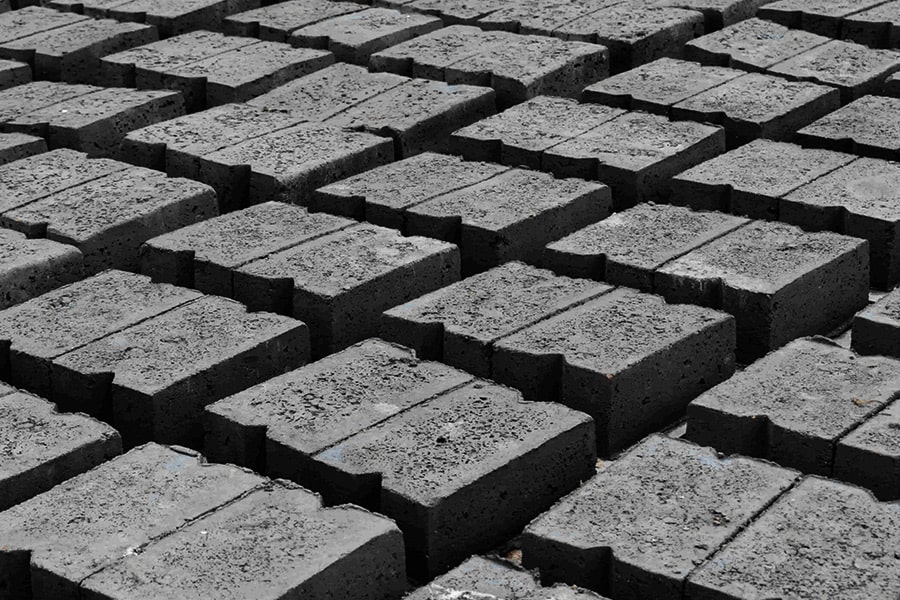
Introduction: Changing Industrial Byproducts into Valuable Assets
When you’re looking to turn industrial waste into valuable resources, finding the right fly ash dryer manufacturers is key. This guide cuts through the noise to help you identify what makes leading technology stand out and how to select the best partner for your needs.
Fly ash is a fine powder produced by burning coal in power plants. Another related material, pond ash, comes from ash stored in water. Both are often seen as waste, but they can be incredibly useful.
Drying this ash changes everything. A fly ash dryer removes moisture, making the ash ready for new uses in industries like cement production and construction. This process turns a disposal problem into a valuable resource.
Historically, much of this ash ended up in landfills or ash ponds, creating environmental challenges. Now, a major shift towards dry handling systems is underway, driven by cost, regulatory requirements, and a desire to conserve water. Dry ash is easier to transport and use, and it helps meet environmental rules.
This guide will help you understand the technology behind this important industrial process.
Understanding Fly Ash Dryer Technology and Processes
At the heart of turning fly ash into a valuable ingredient is sophisticated drying technology. Let’s explore how these machines work.
The Drying Process Step-by-Step
The journey from damp byproduct to valuable commodity follows a clear path:
- Collection and Transport: Fly ash is collected from power plants. Wet ash from ponds is carefully handled and moved to the drying plant via specialized conveyors designed for dust control and safety.
- Feeding and Distribution: The wet ash enters feeding hoppers, often equipped with aeration and vibrator systems to prevent clumping and ensure a steady flow into the dryer for uniform results.
- Drying Chamber Operation: Inside a large rotary dryer, the ash is exposed to hot air. Internal flights lift and agitate the material, ensuring maximum contact with the heat for efficient moisture evaporation. You can learn more about the science in our detailed look at Fly Ash Drying.
- Separation and Collection: After drying, cyclone separators and bag filters capture the dried ash from the gas stream, minimizing emissions and maximizing product recovery.
- Final Processing: The dried ash may be milled to meet specific industry standards before it’s ready for blending, packaging, or direct use.
Working Principles
Fly ash drying relies on efficient heat transfer and material handling:
- Direct Heat Transfer: Hot gases directly contact the wet fly ash, transferring thermal energy to evaporate moisture.
- Convection: The hot gases carry away the evaporated water vapor, maintaining a continuous drying environment.
- Material Agitation: Internal flights in rotary dryers lift and cascade the ash through the hot gas stream, maximizing exposure and ensuring thorough drying.
- Versatile Heat Sources: Modern dryers can use various fuels, including coal, natural gas, and biomass, allowing operators to choose the most cost-effective option.
Key Components of a Drying Plant
A complete drying plant includes several interconnected components:
- Feed Hoppers: Ensure a consistent, uninterrupted flow of wet ash into the dryer.
- Rotary Drum/Shell: The large, rotating cylinder where the drying takes place.
- Hot Air Generator (Burner): Produces the hot gases needed for drying, often with multi-fuel capabilities.
- Internal Flights/Lifters: Metal plates inside the drum that lift and cascade the fly ash to optimize heat transfer.
- Dust Collection System: Cyclone separators and bag filters capture fine ash particles for environmental compliance and product recovery.
- Automated Control Systems: PLC and HMI systems allow for precise monitoring and automatic adjustment of drying parameters, optimizing performance.
Comparing Dryer Types for Fly Ash Applications
While rotary dryers are common, other types are also used in the industry. For a broader perspective, see our guide on What are different types of thermal processing equipment?.
| Dryer Type | Principle | Advantages | Ideal for |
|---|---|---|---|
| Rotary Dryer | Rotating drum with internal flights, direct heat | Robust, handles high moisture content, allows for long retention time, versatile | High-capacity drying of various materials, including fly ash, sludge, and minerals |
| Flash Dryer | Rapid drying of fine particles in a hot gas stream | Very fast drying, high efficiency, compact design | Fine, moist, temperature-sensitive materials, often for pre-drying or final drying of fine ash |
| Fluid Bed Dryer | Material suspended and agitated in an upward flow of hot gas | Excellent heat transfer, uniform drying, gentle handling | Granular or powdery materials, ensuring very uniform drying and precise temperature control. |
Technological Innovations
Modern fly ash dryer manufacturers are pushing boundaries with:
- High-Efficiency Burners: Achieving thermal efficiencies up to 90%, reducing energy costs.
- Advanced PLC/HMI Controls: Intelligent systems for real-time monitoring and automatic adjustments to optimize performance.
- Patented Feeding Mechanisms: Innovations that ensure uniform material flow for consistent drying results.
- Integrated Grinding: Some designs combine drying with grinding for moisture reduction and uniform particle size in one process.
- Effective Emission Control: Advanced dust collection systems to meet stringent environmental regulations.
These innovations are making fly ash processing more efficient and sustainable.
The Benefits and Applications of Professionally Dried Fly Ash
Drying fly ash provides enormous benefits, from protecting our planet to creating new business opportunities. Partnering with experienced fly ash dryer manufacturers helps you open up a versatile, valuable resource.
Key Applications in Industry
Once properly dried, fly ash transforms from a disposal headache into a useful material with applications across multiple industries.
The biggest application is in Portland cement production. As a supplementary cementitious material, it can replace a portion of traditional cement, improving the final product’s strength and durability. Learn more in our article on Fly Ash: A Substitute for Cement.
Other key uses include:
- Concrete and Grout: Dried fly ash improves workability and reduces permeability, making concrete flow easier and last longer.
- Road Construction: It provides consistent, reliable properties for building roads, embankments, and structural fills.
- Soil Stabilization: Fly ash can improve the engineering properties of weak soils, making previously unusable land viable for construction.
- Fly Ash Bricks: These bricks are a greener alternative to traditional clay bricks, requiring less energy to produce.
You can find even more uses in our post on Surprising Products Made with Fly Ash.
Environmental and Sustainability Advantages
Drying fly ash is good for the planet. It’s waste valorization at its finest, turning an environmental problem into a solution.
- Reduced Landfill Use: Efficient drying significantly reduces the amount of ash sent to landfills, freeing up valuable land.
- Lower Carbon Footprint: Replacing energy-intensive Portland cement with fly ash substantially cuts CO₂ emissions. This circular economy approach is explored in Going Green with Coal Fly Ash.
- Water Conservation: Shifting from wet ash ponds to dry handling systems conserves critical water resources.
- Emission Control: Modern drying systems use advanced dust collection to ensure the process itself is clean and compliant.
Economic Gains
The economic case for dried fly ash is just as strong as the environmental one.
- Cost Savings: Using dried fly ash as a cement substitute directly lowers material costs for construction companies.
- New Revenue Stream: For power plants, what was once a disposal cost becomes a sellable product, turning a liability into an asset.
- Improved Efficiency: Modern drying systems use less energy, leading to lower operational costs and better margins.
This economic shift is why there’s so much interest in The Benefits of Fly Ash Beneficiation. Professionally dried fly ash creates value at every step.
A Buyer’s Guide to Selecting Top Fly Ash Dryer Manufacturers
Choosing the right partner for your fly ash drying needs is a critical investment in your operation’s efficiency and profitability. How do you steer the options among fly ash dryer manufacturers to find the perfect fit?
Essential Criteria for Evaluation
Look for these qualities when evaluating potential manufacturers:
- Technical Expertise: The best manufacturers design custom systems for your specific needs, adapting to your facility, fuel sources, and moisture targets.
- Complete Solution: In addition to drying, a complete solution can be provided that includes decarbonization, cooling, milling, classification, material handling & preparation and storage.
- Customization vs. Standard Models: Fly ash properties vary. A manufacturer offering both standard and custom-engineered solutions provides the flexibility to adapt proven designs to your unique material.
- Build Quality: Fly ash is abrasive, so dryers must be built with durable, abrasion-resistant materials to ensure longevity and minimize downtime.
Assessing a Manufacturer’s Reliability
Your partner’s reliability directly impacts your own.
- Proven Track Record: A long history of successful installations across various industries demonstrates experience and refined designs.
- Industry Experience: Decades in the business provide invaluable institutional knowledge about what works in drying technology.
- Quality Assurance: Look for certifications and rigorous quality control protocols, which are essential for How Proper Equipment Increases Safety in Drying Coal Ash Reuse.
The Importance of Pre-Sale Testing
A key differentiator is pre-sale testing capabilities. At Heyl Patterson, our Test Lab allows us to test your actual fly ash sample before you commit.
This material characterization and process simulation approach dramatically reduces risk. We can accurately predict drying times, final moisture content, and energy requirements for your ash. This testing optimizes the system for maximum efficiency and ROI, verifying process viability before you invest. This proactive approach is fundamental to How Product Testing Labs Reduce Risk and Improve ROI in Thermal Processing Projects.
Comprehensive Support and Services
The relationship shouldn’t end at purchase. Look for a partner who provides:
- Turnkey Project Management: A single point of accountability from design through construction simplifies the process and ensures all components work together seamlessly.
- Installation and Commissioning: On-site support from the manufacturer’s experts ensures optimal setup and operator training.
- After-Sales Support: Quick, knowledgeable technical support and readily available spare parts are crucial for minimizing costly downtime over the equipment’s lifetime.
At Heyl Patterson, we understand you’re looking for a partner to stand beside you throughout your equipment’s lifecycle, helping you reliably and profitably turn byproducts into assets.
Frequently Asked Questions about Fly Ash Dryers
Here are answers to some of the most common questions about fly ash drying solutions.
How do leading fly ash dryer manufacturers ensure high efficiency?
Leading fly ash dryer manufacturers achieve high efficiency through a combination of smart design and advanced technology:
- Optimized Internals: The design of internal flights in rotary dryers is crucial for maximizing the surface area of fly ash exposed to hot gases, ensuring thorough moisture removal.
- High-Efficiency Heat Source: Modern systems can achieve thermal efficiencies of 70% to 90%, thereby lowering fuel costs and reducing environmental impact.
- Proper Insulation: Insulating the dryer shell is vital for reducing heat loss and improving overall system performance, especially in colder climates.
- Intelligent Automation: PLC and HMI systems continuously monitor and adjust parameters such as temperature and airflow, ensuring the dryer operates at peak performance in real time.
What are the typical technical specifications to consider?
When evaluating a fly ash dryer, consider these key specifications to match the equipment to your needs:
- Production Capacity: How much ash the dryer can process per hour (e.g., 5 to 90 TPH).
- Power Consumption: The electrical power required to run the system (e.g., 50 to 450 hp).
- Fuel Type: Flexibility to use coal, gas, biomass, or other locally available fuels.
- Final Moisture Content: The target moisture level, typically less than 1% for use in cement.
- Operating Temperature: Usually between 200°C and 600°C, depending on the ash.
- Thermal Efficiency: The percentage of heat converted into useful drying, often 70% to 85%.
What makes some fly ash dryer manufacturers stand out from the rest?
Certain qualities separate the best fly ash dryer manufacturers from the pack:
- Innovation and R&D: A commitment to innovation, often demonstrated by holding patents for proprietary technology that offers real performance advantages.
- Integrated Solutions: The ability to provide comprehensive systems, from feeding and conveying to drying, storage, and loadout.
- Dedicated Testing Facility: A crucial differentiator is a lab to prove process viability. A manufacturer that can test your specific material, like we discuss in How Product Testing Labs Reduce Risk and Improve ROI in Thermal Processing Projects, significantly reduces risk and optimizes your investment.
- Proven Track Record: A long history of successful global projects speaks to a manufacturer’s reliability and expertise.
- Customization: The flexibility to design systems for unique site conditions and material properties ensures you get a solution that truly fits your needs.
Conclusion: Partnering with the Right Manufacturer for a Sustainable Future
We’ve journeyed together through fly ash drying, finding how sophisticated technology transforms what was once considered waste into something genuinely valuable. From the inner workings of rotary drums to the remarkable ways dried fly ash strengthens our roads and buildings, it’s been quite a story.
Here’s what we’ve learned: Fly ash is a valuable resource, not a disposal problem. When properly dried and processed, this fine powder becomes an essential ingredient in cement production, construction materials, and countless other applications. The technology that makes this possible, efficient, reliable drying systems is the bridge between environmental challenge and sustainable solution.
The shift from wet disposal methods to dry handling systems isn’t just about meeting regulations. It’s about conserving water, reducing reliance on landfills, and lowering the construction industry’s carbon footprint. It’s about turning a cost center into a revenue stream.
But here’s the thing: not all drying systems are created equal. Choosing the right fly ash dryer manufacturers can make or break your operation. You need a partner who brings deep technical expertise, proven engineering capabilities, and robust build quality. You need someone who understands that your fly ash isn’t like anyone else’s, and that cookie-cutter solutions rarely deliver optimal results.
That’s where comprehensive pre-sale testing becomes invaluable. Being able to analyze your specific material, simulate the drying process, and verify results before you invest is not just helpful; it’s essential. It’s the difference between hoping your system will work and knowing it will.
At Heyl Patterson, we’ve built our reputation on delivering exactly that kind of confidence with over 150 years of experience. We pioneer engineered thermal processing solutions that are designed for efficiency and built to last. From drying systems to complete integrated system solutions, Heyl Patterson can meet all your needs. Our state-of-the-art product testing laboratory isn’t just a nice feature; it’s our way of ensuring that every system we deliver is optimized for your unique needs.
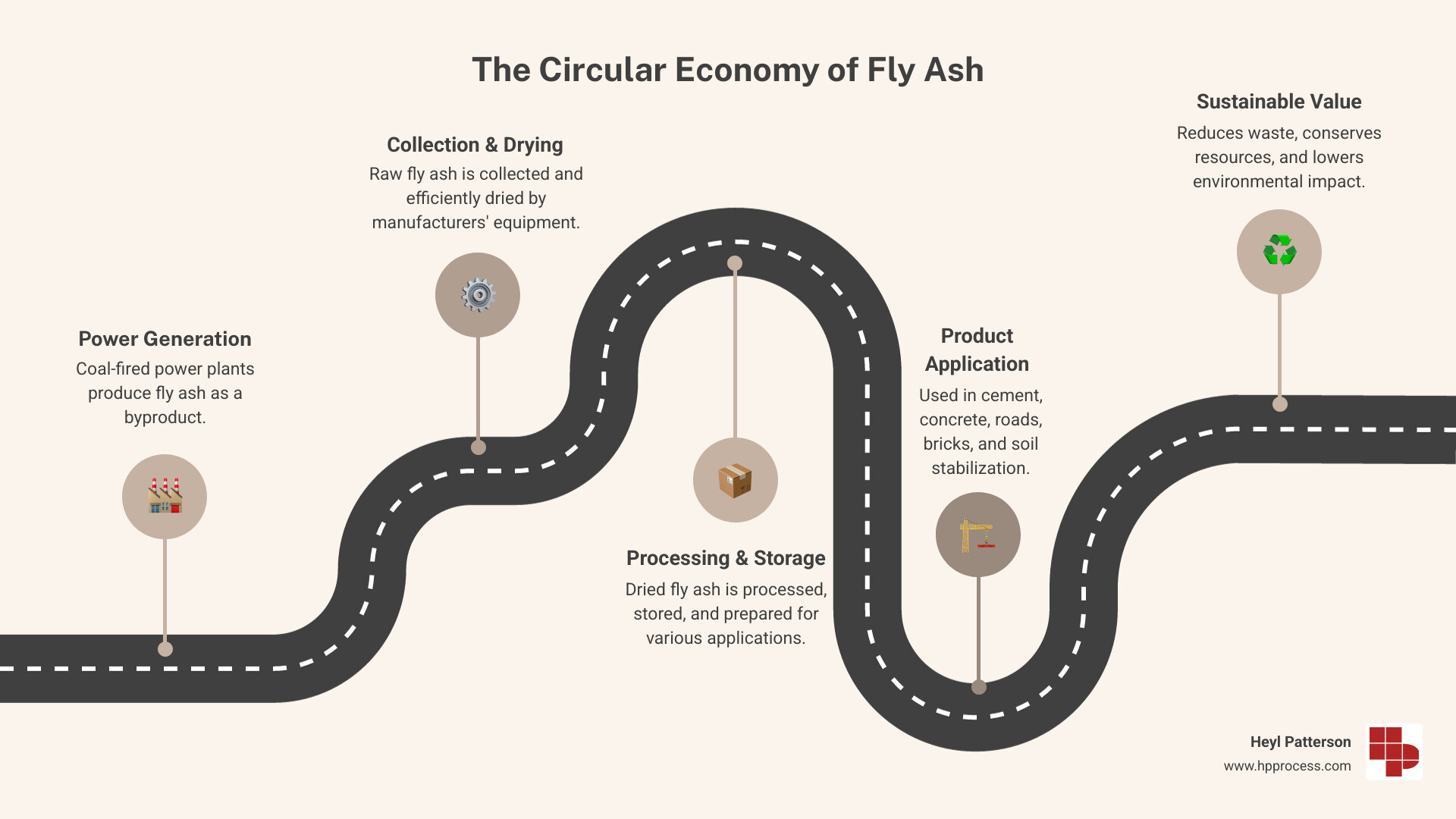
We believe in the circular economy of fly ash. We believe in turning industrial byproducts into assets. And we believe in partnerships that help our clients achieve both their operational goals and their sustainability commitments.
The future of fly ash processing is bright, and it’s sustainable. Whether you’re looking to reduce disposal costs, create new revenue streams, or simply do right by the environment, the right drying technology and the right manufacturing partner can get you there.
Ready to explore what’s possible? Learn more about our advanced solutions for the coal fly ash industry. Let’s talk about how we can help you turn your fly ash challenges into opportunities for a more sustainable future.
Last updated on February 3rd, 2026 at 11:03 am