

Fertilizer Drying
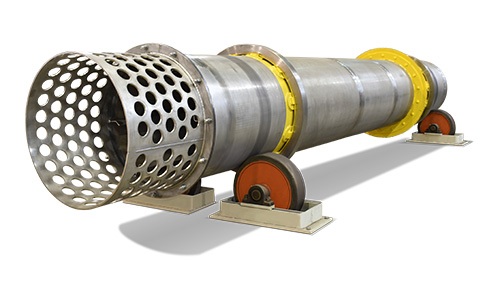
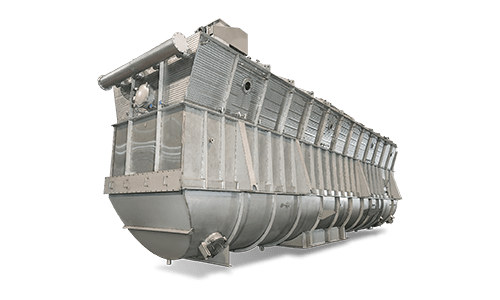
Heyl Patterson rotary dryers are highly efficient in lowering the moisture content in fertilizer pellets without agglomeration and with minimal fines carryover. Many fertilizers can be dried with our rotary dryer design. Our fertilizer processing experience includes monoammonium phosphate (MAP), diammonium phosphate (DAP), single superphosphate (SSP), triple superphosphate (TSP), potash, phosphate and urea. Our energy-efficient fluid bed drying technology is also suitable for processing a variety of fertilizers
Custom Solutions for Processing Fertilizer
Featured Case Study

Discover how Heyl Patterson Thermal Processing solved drying a fertilizer pellet to a lower moisture content.
Speak With a Representative.
Our experience in fertilizer drying will guide you through selecting process equipment that best fits your application and requirements. Product testing can be performed at the CPEG Innovation Center and Test Lab with your product sample and our process equipment.
Engineered for Fertilizer Drying, Conditioning & Production
Fertilizer Processing Pain Points We Solve
- Inconsistent moisture content affecting fertilizer storage stability
- Pellet degradation, dusting, or agglomeration during drying
- Temperature fluctuations impacting product quality
- Dust carryover and loss of fine fertilizer particles
- Material buildup or fouling in poorly designed dryers
- Energy inefficiencies in large-scale fertilizer production
- Equipment wear from corrosive or abrasive fertilizer compounds
- Throughput bottlenecks in the drying and cooling stages
Fertilizer manufacturing requires reliable thermal systems capable of controlling moisture, stabilizing product quality, and operating continuously at large production volumes.
Heyl Patterson Thermal Processing designs rotary dryers, rotary coolers, rotary calciners, and engineered thermal systems used across fertilizer manufacturing and conditioning processes.
Our rotary equipment supports key stages of fertilizer production from drying freshly granulated pellets to cooling, conditioning, and preparing fertilizers for storage and packaging.
We deliver:
- Uniform heat transfer for consistent pellet drying
- Adjustable residence time to control final moisture levels
- Internal flight designs that minimize pellet breakage
- High-capacity systems for large-scale fertilizer plants
Rotary dryers are commonly used to process fertilizers such as monoammonium phosphate (MAP), diammonium phosphate (DAP), potash, urea, and other compound fertilizers.
Our equipment support:
- Moisture reduction after granulation
- Thermal conditioning prior to screening or coating
- Stabilization of fertilizer pellets for storage
- Removal of excess process moisture
- Preparation for downstream packaging and distribution
Reliable thermal processing improves production efficiency and helps fertilizer producers maintain consistent product quality across varying feed materials.
Heyl Patterson Thermal Processing equipment supports:
- Rotary cooling of fertilizer pellets
- Controlled product temperature reduction
- Integration with drying and granulation systems
- Stabilization of pellets before screening and packaging
Efficient drying and cooling systems help fertilizer plants maintain continuous throughput while producing consistent, high-quality products.

Why Choose Heyl Patterson Thermal Processing
Fertilizer Producers Need
- Reliable moisture control for fertilizer pellets
- High-throughput equipment for large-scale production lines
- Precise control of temperature and residence time
- Equipment designed for abrasive or corrosive materials
- Stable material flow through drying and cooling systems
- Custom internals engineered for fertilizer pellet behavior

Heyl Patterson Thermal Processing Benefits
- Consistent fertilizer drying across variable feed materials
- Reduced operational costs through efficient heat transfer
- Long equipment life from heavy-duty industrial construction
- High reliability for continuous fertilizer production
- Improved pellet durability and product consistency
- Systems engineered specifically for fertilizer processes
Technical Advantages
- Direct or indirect heating options for fertilizer processing
- Custom internal flight designs for pellet handling
- High-capacity rotary dryers for bulk production
- Advanced sealing systems to minimize dust carryover
- Engineered insulation for improved energy efficiency
- Heavy-duty shell and drive systems for continuous operation
Applications
Fertilizer Production
- Drying compound fertilizer pellets
- Moisture control after granulation
- Pellet stabilization before storage
- Thermal conditioning for screening and coating
Phosphate & Potash Fertilizers
- Monoammonium phosphate (MAP) drying
- Diammonium phosphate (DAP) processing
- Potash drying and conditioning
- Phosphate fertilizer moisture reduction
Organic & Specialty Fertilizers
- Organic fertilizer pellet drying
- Bio-based fertilizer processing
- Specialty nutrient blends
- Conditioning of granulated fertilizer products
System Integration Capabilities
Our thermal systems integrate seamlessly with:
- Granulation and pelletizing systems
- Material handling and conveying equipment
- Fertilizer screening and classification systems
- Dust collection and emissions control equipment
- Coating and packaging lines
- Automated feed and discharge systems
Every system is custom-engineered to meet:
- Moisture reduction targets
- Residence time requirements
- Heat transfer and temperature profiles
- Throughput capacity and plant layout constraints
- Integration with existing fertilizer production lines
Complete Process Solutions Beyond Thermal Processing
In partnership with Carrier Process Equipment Group (CPEG), Heyl Patterson Thermal Processing can help integrate complementary equipment and technologies into a fully optimized production line from a single trusted source.
FAQs
Why is drying important in fertilizer production?
Drying reduces moisture levels after granulation, preventing pellet clumping, improving storage stability, and ensuring consistent product quality.
What types of fertilizers can be processed using rotary dryers?
Rotary dryers are commonly used for compound fertilizers such as MAP, DAP, potash, urea, and other phosphate-based fertilizers.
How do rotary dryers protect fertilizer pellets during processing?
Custom internal flight designs gently cascade the pellets through hot gas streams, ensuring uniform drying while minimizing breakage and dust generation.
Why is cooling required after fertilizer drying?
Cooling stabilizes the pellets and prevents moisture absorption or caking before screening, coating, and packaging.
Can fertilizer drying systems be integrated into existing production lines?
Yes. Heyl Patterson Thermal Processing equipment can be engineered to integrate with existing granulation, screening, and packaging systems while maintaining the required production throughput.
Partner With Us.
Fertilizer producers depend on reliable thermal processing systems to control moisture, stabilize pellet quality, and maintain continuous production. Heyl Patterson Thermal Processing partners with fertilizer manufacturers worldwide to design rotary dryers, coolers, and integrated thermal systems that support high-throughput production and consistent product performance.
Contact our engineering team to discuss your fertilizer processing requirements and explore a custom-engineered thermal solution for your facility.