

MultiDisc Thermal Processors
Heyl Patterson’s MultiDisc Thermal Processor is a low or medium-temperature processing unit that uses an innovative conduction-convection heat transfer method to indirectly dry and/or cool bulk solids, including minerals, chemicals, pigments, soils, and sludges. Indirect processing offers significant advantages, such as a higher product-to-surface area ratio, very high thermal efficiency, and minimal exhaust gas volumes requiring less costly air pollution control equipment. Our MultiDisc thermal processor features an innovative design that further reduces surface fouling, pluggage, and horsepower consumption, effectively reducing your overall operational costs.
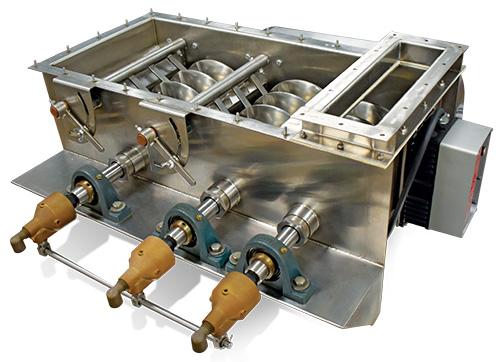
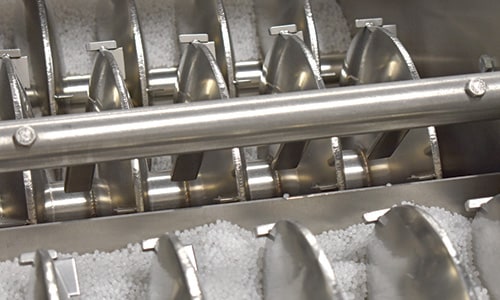
Configurable with meshed discs, non-meshed discs, or a combination of the two. Mesh discs provide enhanced mixing for difficult-to-transport wet solids or those that adhere to hot surfaces and are ideal for batch processing where uniform temperature control is required.
Features & Benefits
- High product-to-surface ratio improves heat transfer efficiency
- Indirect processing produces minimal exhaust gas volumes
- Versatile design allows heat transfer fluids to be circulated in parallel flow patterns
- Angled conveying bars eliminate sidewall by passing or short-circuiting
- Compact size delivers total processing capacity in a footprint that could barely accommodate the drive train of similar thermal processors
- Agriculture /Grains
- Gypsum
- Organic Chemicals
- Ceramics
- Coal
- Metals
- Pigments
- Polyester
- Soda Ash
- Mining & Minerals
Heyl Patterson MultiDisc thermal processors are recommended for countless drying, heating, and cooling applications. Download our MultiDisc Thermal Processor brochure to see more applications.
High Area-To-Volume Processing Ratio
Hollow Disc & Shaft Assembly Design
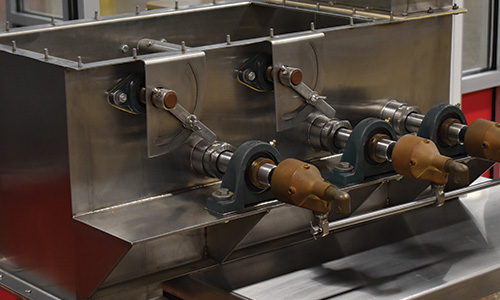
Multiple discs are permanently attached to the shaft to create a fixed, sealed, self-contained unit. Cooling water, steam, thermal fluid, or refrigerants circulate through the hollow assembly, transferring heat or cooling action to the revolving disc surfaces.

Product flows between and around the discs in the trough and, as a result, is exposed to a very large amount of disc surface area within a relatively small container, resulting in improved efficiency.
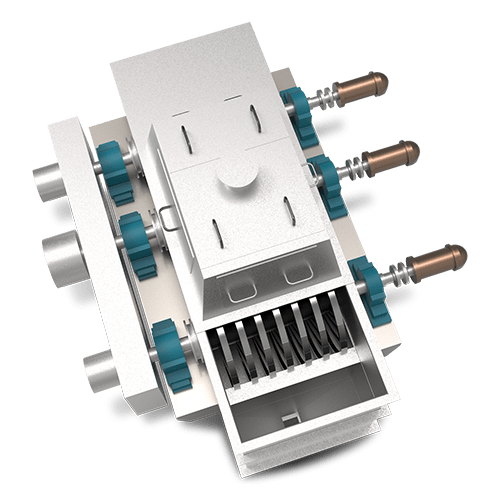
Indirect heating provides a higher product-to surface-area ratio for improved thermal efficiencies. It uses minimal exhaust gas volume requiring less costly air pollution control equipment or volatile recovery systems. Inert, oxidizing, reducing, and dehumidifying process atmospheres can be maintained. And fine materials are easily processed without excessive product entrainment in the gas stream.
Built to your unique specifications, or designed by our engineers to exceed your specific application requirements, each Heyl Patterson MultiDisc can be rigorously pilot tested at our Innovation Center & Test Lab before the final design is implemented.
Speak to an expert.
Options & Accessories
- Meshed or non-meshed disc assemblies
- Steam, heat transfer, fluid or electric power systems
- Circulation systems
- Agitation clips & breaker bars
- Electric heating element
- Control systems
Downloads

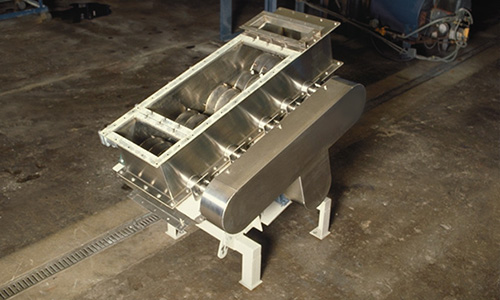
What is a MultiDisc Thermal Processor?
The Heyl Patterson MultiDisc Thermal Processor is an indirect, low- to medium-temperature processing unit that uses a combination of conduction and convection heat transfer to dry, heat, or cool bulk solids. It delivers precise, energy-efficient thermal treatment in a compact footprint, making it well-suited for materials that cannot tolerate direct contact with a heat source or where minimizing exhaust gas volume is a process or environmental priority.
How It Works
The Heyl Patterson MultiDisc Thermal Processor uses a hollow disc-and-shaft assembly to transfer thermal energy indirectly to the material moving through the trough. It is engineered around four integrated principles that work together to give processors controlled, efficient thermal treatment across a wide range of bulk solid materials:
Hollow Disc & Shaft Assembly
Multiple hollow discs are permanently attached to a hollow rotating shaft, forming a single sealed, self-contained assembly. A heat transfer medium, either steam, thermal fluid, hot water, chilled fluid, or electric heating elements, circulates through the shaft and into the discs, transferring thermal energy directly to the rotating disc surfaces. Because the heat source is fully contained within the assembly and never contacts the product directly, the system achieves true indirect processing with no combustion gases introduced into the material stream.
High Surface Area to Volume Ratio
As material flows through the trough, it moves between and around the rotating disc surfaces, exposing each particle to a large amount of heated or cooled surface area within a relatively small vessel. This geometry is the MultiDisc design’s core efficiency advantage: it packs significantly more heat-transfer surface area into a given footprint than conventional jacketed or single-shaft processors. The result is faster thermal treatment at lower operating temperatures, with less energy consumed per unit of material processed.
Controlled Material Flow & Mixing
Angled conveying bars move material through the trough in a controlled pattern, preventing short-circuiting or bypassing along the sidewalls. For sticky, cohesive, or surface-fouling materials, meshed disc configurations provide enhanced mechanical mixing that breaks up agglomerates and keeps material in consistent contact with the disc surfaces. You can add agitation clips and breaker bars where you need additional mechanical action. This flexibility in disc configuration allows the same basic design to handle materials ranging from free-flowing granules to wet filter cakes and sludges.
Atmosphere & Exhaust Control
Because processing occurs indirectly, exhaust gas volume is minimal compared to direct-fired systems. The enclosed trough can maintain inert, oxidizing, reducing, or dehumidifying process atmospheres depending on the material requirements, and the low exhaust volumes simplify or reduce the cost of downstream air pollution control and volatile recovery systems. This makes the MultiDisc particularly well-suited for processing chemicals, pigments, and other materials where atmospheric control or emissions management is a design constraint.
Key Benefit
This design is well-suited for drying, heating, or cooling bulk solids including minerals, chemicals, pigments, agricultural products, gypsum, soda ash, and industrial sludges, where precise temperature control, minimal exhaust gas generation, indirect heat transfer, and a compact system footprint are critical to process performance and operating economics.
Processors (MultiDisc & Specialized Systems) FAQs
What materials are best suited for MultiDisc thermal processors?
MultiDisc processors excel with bulk solids that benefit from indirect conduction/convection heat transfer, including chemicals, minerals, agglomerates, and heat-sensitive products.
How does a MultiDisc processor differ from a traditional rotary dryer?
MultiDisc processors use stacked discs to increase surface area for heat transfer without moving belts or screws, enabling more compact designs and tighter temperature control.
Can these processors handle sticky or cohesive materials?
Yes, configurations with meshed discs or gentle agitation promote uniform heat transfer and prevent buildup in sticky or challenging materials.
Are MultiDisc processors suitable for both drying and cooling?
Yes, depending on the configuration and heat-transfer medium (steam, thermal fluid, electricity, chilled fluid), processors can be optimized for either drying or cooling.
What operational benefits do these systems provide?
Advantages include lower exhaust-gas volumes, lower air-pollution-control costs, a compact footprint, and more responsive temperature control than some conventional dryers.
How do I determine whether a processor is more cost-effective than a traditional dryer for my process?
A process evaluation, including moisture content, temperature goals, and energy cost modeling, will identify where a processor’s conduction/convection design yields savings in energy, footprint, or maintenance.
Featured Industries
Mining & Minerals
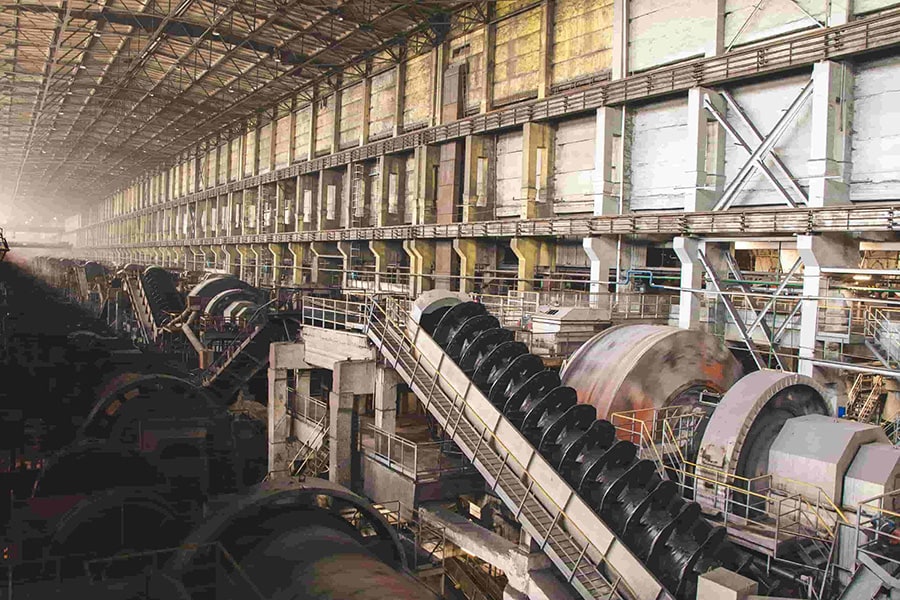
MultiDisc processors handle bulk mineral materials requiring gentle indirect thermal treatment, delivering uniform heating or drying across a wide range of particle sizes with low energy consumption and a compact system footprint.
Chemical Processing

The MultiDisc Thermal Processor dries, heats, or cools specialty chemical materials through indirect conduction, maintaining precise temperature control with minimal exhaust gas generation, making it well-suited for regulated or atmosphere-sensitive chemical processing applications.
Coal & Fly Ash
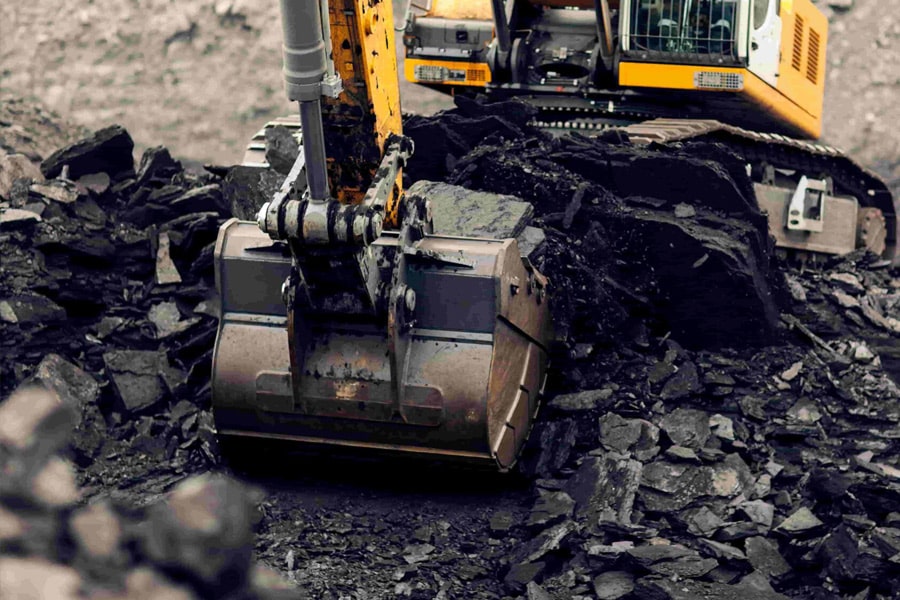
Heyl Patterson MultiDisc processors apply indirect thermal treatment to coal byproducts and fly ash, providing controlled heating or drying with minimal exhaust volume and atmosphere containment suited to regulated industrial processing environments.