

Dryers & Coolers
Heyl Patterson Thermal Processing has been providing customized and reliable industrial drying solutions for the powder and bulk solids industry since 1874. This extensive experience and knowledge are embedded within the entire team, who design and build every piece of equipment to ensure innovation and maximum efficiency. For drying and cooling applications, we offer customers three main product lines, each perfectly suited for specific applications and materials. We never force a specific technology but work closely with customers to find the best solution, even for challenging materials.
Request A Quote
Let a Heyl Patterson Solutions Expert assist you in obtaining product information and pricing for your next project.
Our Drying & Cooling Process Equipment
Heyl Patterson Thermal Processing: Expertly-Designed Dryers & Coolers for the Powder, Bulk Solids Processing and Material Handling Industry.
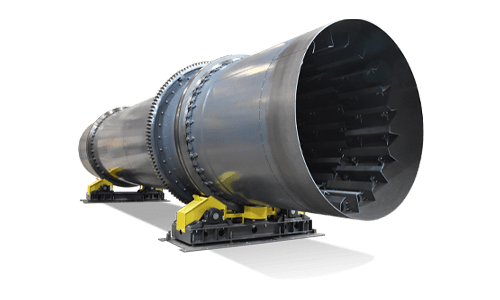
Rotary Dryers & Coolers
Considered the workhorses of the thermal processing industry, nothing beats the ruggedness and versatility of rotary dryers and coolers. Heyl Patterson’s rotary dryers and coolers efficiently process a wide range of materials, from clumped solids to liquid sludges, due to lifting flights specialized for each material. Customize your rotary dryer or cooler by specific starting and final moisture requirements, material temperature limits, air velocity, and retention time.
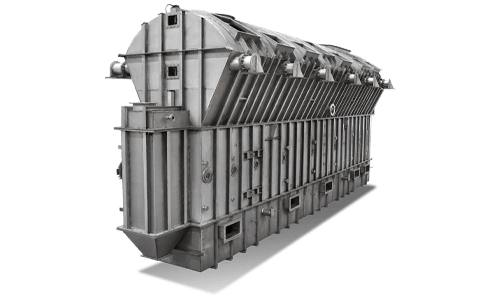
Fluid Bed Dryers & Coolers
Perfect for free-flowing materials, Heyl Patterson’s fluid bed dryers and coolers are some of the largest in the world. Capable of a high rate of heat transfer and gentle handling of material, fluid beds can be fine-tuned for maximum efficiency specific to each material. Heyl Patterson Thermal Processing offers three main types of fluid beds: Vibrating, Circular Type, and Trough Type.

Flash Dryers
A flash dryer is often the perfect solution when a high moisture, temperature-sensitive, or very fine material needs to be dried quickly. Heyl Patterson flash dryers ensure each particle’s drying time is proportional to the size and weight, leading to a thoroughly dried and degradation-free end product. Flash dryers are also available in a Rotacurrent or Venturijet design.
Dryers & Coolers FAQs
How do I know if I need a rotary dryer or a rotary cooler for my material?
A rotary dryer is used when reducing moisture content is the priority, while a rotary cooler is used to lower product temperature after processing. If your operation generates heat during drying, a combined dryer/cooler or staged design may be most efficient.
What material properties affect dryer and cooler selection?
Particle size, moisture level, abrasiveness, heat sensitivity, and bulk density all influence equipment choice. Materials that cake or stick may require specialized flights or coatings to maintain flow and prevent buildup.
Can heat recovery be integrated into a dryer or cooler system?
Yes, heat recovery loops can be designed to capture waste heat from exhaust gases and reuse it in the process, lowering fuel consumption and operating costs.
How does the airflow pattern impact drying and cooling efficiency?
Airflow direction (co-current vs counter-current) affects residence time and heat transfer. Counter-current configurations often improve efficiency for tough drying applications, while co-current can be gentler on heat-sensitive materials.
What is the typical timeline from evaluation to installation?
After material testing and design review, fabrication timelines vary by configuration and size but typically range from 12 to 24 weeks from order to delivery. Early material characterization accelerates the process.
Do you offer pilot testing for dryers and coolers before full-scale investment?
Yes, pilot testing and lab trials help validate design assumptions and optimize duty conditions before committing capital to a full-scale system.