

Procesadores térmicos MultiDisc
El procesador térmico MultiDisc de Heyl Patterson es una unidad de procesamiento a baja o media temperatura que utiliza un innovador método de transferencia de calor por conducción-convección para secar y/o enfriar indirectamente sólidos a granel, incluyendo minerales, productos químicos, pigmentos, suelos y lodos. El procesamiento indirecto ofrece ventajas significativas, como una mayor relación producto-superficie, una eficiencia térmica muy alta y volúmenes mínimos de gases de escape, lo que requiere equipos de control de la contaminación atmosférica menos costosos. Nuestro procesador térmico MultiDisc presenta un diseño innovador que reduce aún más la suciedad en la superficie, los atascos y el consumo de potencia, lo que reduce eficazmente los costes operativos generales.
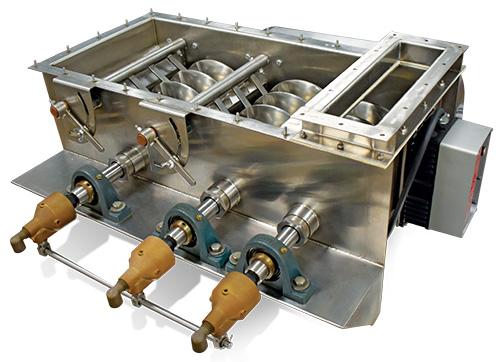
Configurable con discos de malla, discos sin malla o una combinación de ambos. Los discos de malla proporcionan una mezcla mejorada para sólidos húmedos difíciles de transportar o que se adhieren a superficies calientes, y son ideales para el procesamiento por lotes donde se requiere un control uniforme de la temperatura.
Características y ventajas
- La elevada relación producto/superficie mejora la eficiencia de la transferencia de calor.
- El procesamiento indirecto produce volúmenes mínimos de gases de escape.
- El diseño versátil permite que los fluidos de transferencia de calor circulen en patrones de flujo paralelos.
- Las barras de transporte en ángulo eliminan el paso lateral o el cortocircuito.
- Su tamaño compacto ofrece una capacidad de procesamiento total en un espacio que apenas podría albergar el tren de transmisión de procesadores térmicos similares.
- Agricultura / Cereales
- Yeso
- Productos químicos orgánicos
- Cerámica
- Carbón
- Metales
- Pigmentos
- Poliéster
- Carbonato sódico
- Minería y minerales
Los procesadores térmicos MultiDisc de Heyl Patterson se recomiendan para innumerables aplicaciones de secado, calentamiento y enfriamiento. Descargue nuestro folleto sobre procesadores térmicos MultiDisc para ver más aplicaciones.
Alta relación entre área y volumen de procesamiento
Diseño del conjunto de disco hueco y eje
Varios discos están fijados de forma permanente al eje para crear una unidad fija, sellada y autónoma. El agua de refrigeración, el vapor, el fluido térmico o los refrigerantes circulan a través del conjunto hueco, transfiriendo el calor o la acción de refrigeración a las superficies giratorias de los discos.

El producto fluye entre y alrededor de los discos en la cubeta y, como resultado, queda expuesto a una gran superficie de discos dentro de un recipiente relativamente pequeño, lo que mejora la eficiencia.
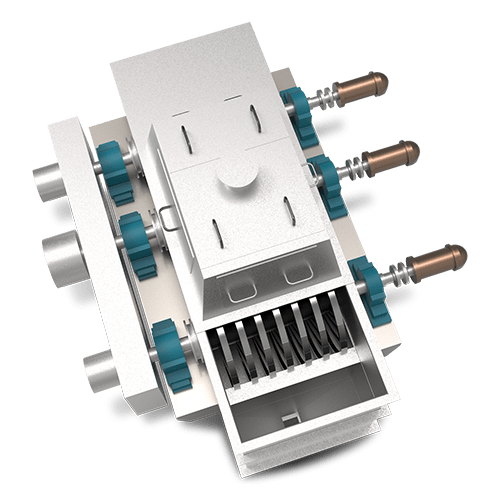
El calentamiento indirecto proporciona una mayor relación producto/superficie para mejorar la eficiencia térmica. Utiliza un volumen mínimo de gases de escape, lo que requiere equipos de control de la contaminación atmosférica o sistemas de recuperación de compuestos volátiles menos costosos. Se pueden mantener atmósferas de proceso inertes, oxidantes, reductoras y deshumidificadoras. Además, los materiales finos se procesan fácilmente sin un arrastre excesivo del producto en la corriente de gas.
Fabricados según sus especificaciones únicas o diseñados por nuestros ingenieros para superar los requisitos específicos de su aplicación, cada MultiDisc de Heyl Patterson puede someterse a rigurosas pruebas piloto en nuestro Centro de Innovación y Laboratorio de Pruebas antes de que se implemente el diseño final.
Hable con un experto.
Opciones y accesorios
- Conjuntos de discos con malla o sin malla
- Sistemas de vapor, transferencia de calor, fluidos o energía eléctrica.
- Sistemas de circulación
- Clips de agitación y barras rompedoras
- Elemento calefactor eléctrico
- Sistemas de control
Descargas
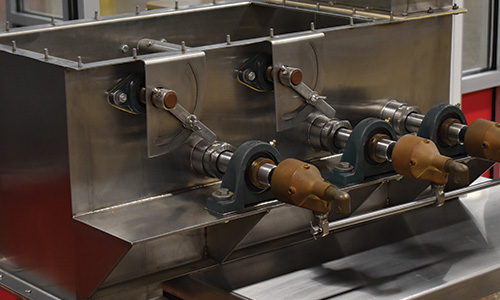

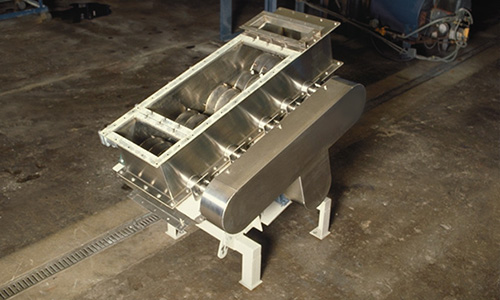
What is a MultiDisc Thermal Processor?
The Heyl Patterson MultiDisc Thermal Processor is an indirect, low- to medium-temperature processing unit that uses a combination of conduction and convection heat transfer to dry, heat, or cool bulk solids. It delivers precise, energy-efficient thermal treatment in a compact footprint, making it well-suited for materials that cannot tolerate direct contact with a heat source or where minimizing exhaust gas volume is a process or environmental priority.
Cómo funciona
The Heyl Patterson MultiDisc Thermal Processor uses a hollow disc-and-shaft assembly to transfer thermal energy indirectly to the material moving through the trough. It is engineered around four integrated principles that work together to give processors controlled, efficient thermal treatment across a wide range of bulk solid materials:
Conjunto de disco hueco y eje
Multiple hollow discs are permanently attached to a hollow rotating shaft, forming a single sealed, self-contained assembly. A heat transfer medium, either steam, thermal fluid, hot water, chilled fluid, or electric heating elements, circulates through the shaft and into the discs, transferring thermal energy directly to the rotating disc surfaces. Because the heat source is fully contained within the assembly and never contacts the product directly, the system achieves true indirect processing with no combustion gases introduced into the material stream.
High Surface Area to Volume Ratio
As material flows through the trough, it moves between and around the rotating disc surfaces, exposing each particle to a large amount of heated or cooled surface area within a relatively small vessel. This geometry is the MultiDisc design’s core efficiency advantage: it packs significantly more heat-transfer surface area into a given footprint than conventional jacketed or single-shaft processors. The result is faster thermal treatment at lower operating temperatures, with less energy consumed per unit of material processed.
Controlled Material Flow & Mixing
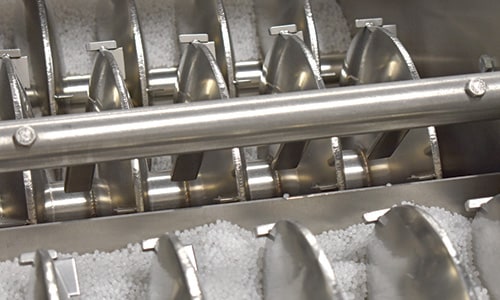
Angled conveying bars move material through the trough in a controlled pattern, preventing short-circuiting or bypassing along the sidewalls. For sticky, cohesive, or surface-fouling materials, meshed disc configurations provide enhanced mechanical mixing that breaks up agglomerates and keeps material in consistent contact with the disc surfaces. You can add agitation clips and breaker bars where you need additional mechanical action. This flexibility in disc configuration allows the same basic design to handle materials ranging from free-flowing granules to wet filter cakes and sludges.
Atmosphere & Exhaust Control
Because processing occurs indirectly, exhaust gas volume is minimal compared to direct-fired systems. The enclosed trough can maintain inert, oxidizing, reducing, or dehumidifying process atmospheres depending on the material requirements, and the low exhaust volumes simplify or reduce the cost of downstream air pollution control and volatile recovery systems. This makes the MultiDisc particularly well-suited for processing chemicals, pigments, and other materials where atmospheric control or emissions management is a design constraint.
Key Benefit
This design is well-suited for drying, heating, or cooling bulk solids including minerals, chemicals, pigments, agricultural products, gypsum, soda ash, and industrial sludges, where precise temperature control, minimal exhaust gas generation, indirect heat transfer, and a compact system footprint are critical to process performance and operating economics.
Processors (MultiDisc & Specialized Systems) FAQs
What materials are best suited for MultiDisc thermal processors?
MultiDisc processors excel with bulk solids that benefit from indirect conduction/convection heat transfer, including chemicals, minerals, agglomerates, and heat-sensitive products.
How does a MultiDisc processor differ from a traditional rotary dryer?
MultiDisc processors use stacked discs to increase surface area for heat transfer without moving belts or screws, enabling more compact designs and tighter temperature control.
Can these processors handle sticky or cohesive materials?
Yes, configurations with meshed discs or gentle agitation promote uniform heat transfer and prevent buildup in sticky or challenging materials.
Are MultiDisc processors suitable for both drying and cooling?
Yes, depending on the configuration and heat-transfer medium (steam, thermal fluid, electricity, chilled fluid), processors can be optimized for either drying or cooling.
What operational benefits do these systems provide?
Advantages include lower exhaust-gas volumes, lower air-pollution-control costs, a compact footprint, and more responsive temperature control than some conventional dryers.
How do I determine whether a processor is more cost-effective than a traditional dryer for my process?
A process evaluation, including moisture content, temperature goals, and energy cost modeling, will identify where a processor’s conduction/convection design yields savings in energy, footprint, or maintenance.
Featured Industries
Minería y minerales
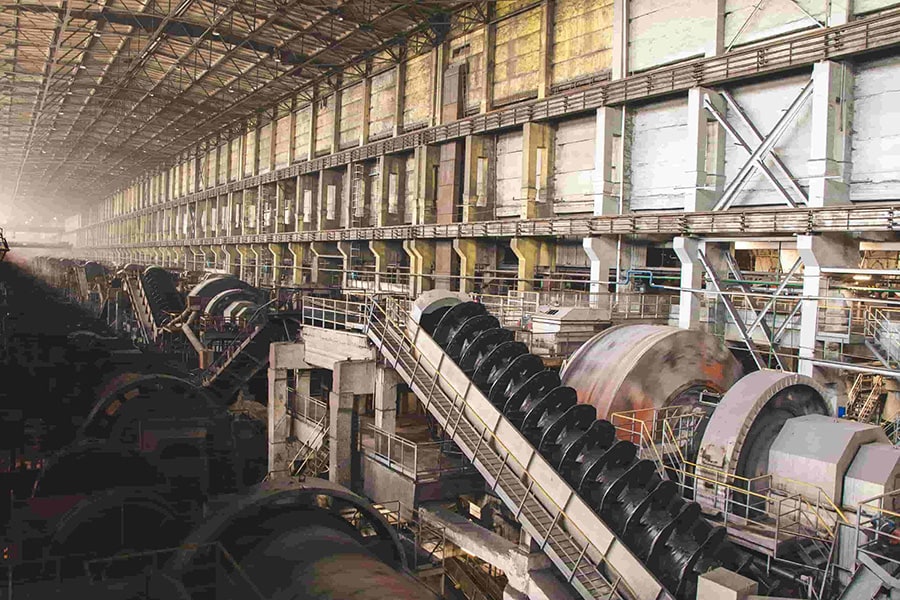
MultiDisc processors handle bulk mineral materials requiring gentle indirect thermal treatment, delivering uniform heating or drying across a wide range of particle sizes with low energy consumption and a compact system footprint.
Procesamiento químico

The MultiDisc Thermal Processor dries, heats, or cools specialty chemical materials through indirect conduction, maintaining precise temperature control with minimal exhaust gas generation, making it well-suited for regulated or atmosphere-sensitive chemical processing applications.
Carbón y cenizas volantes
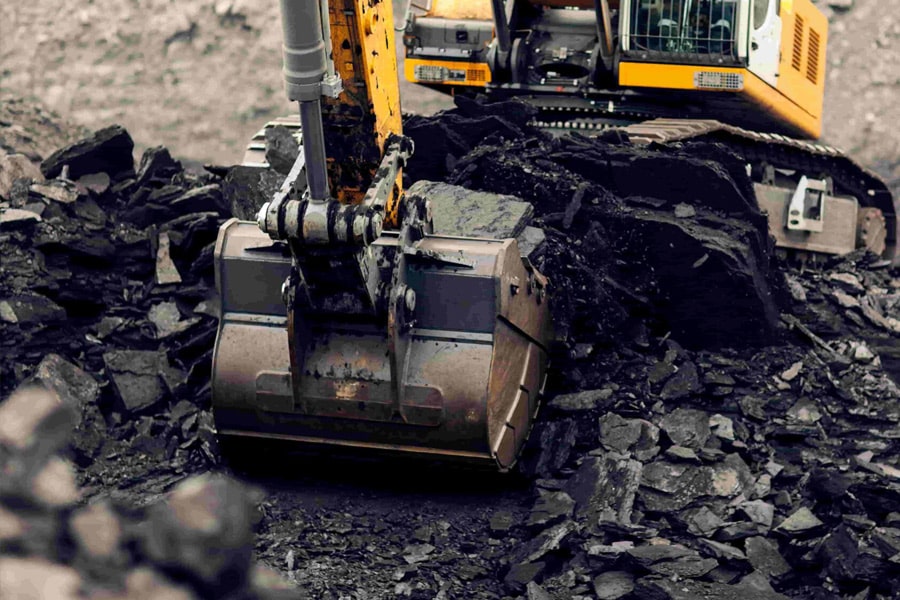
Heyl Patterson MultiDisc processors apply indirect thermal treatment to coal byproducts and fly ash, providing controlled heating or drying with minimal exhaust volume and atmosphere containment suited to regulated industrial processing environments.