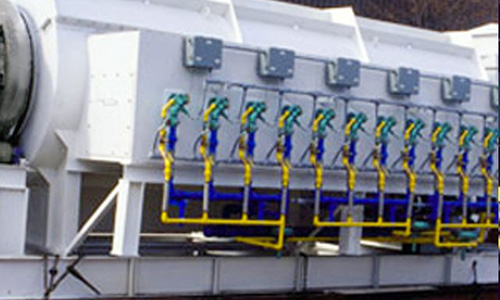

Fluid Bed Calciners
Efficiency process a wide variety of materials with Heyl Patterson’s Fluid Bed Calciners. Our fluid bed calciners are a cost-effective and energy-efficient solution to high-capacity applications where direct contact with the heating medium is acceptable or desirable. Increased mass and heat transfer rates are accomplished with its high surface area contact between the fluid and solid per-unit bed volume.
Features & Benefits
- Fewer moving parts come in contact with product for minimal degradation.
- Variable retention times by varying bed depth provide precise temperature control over a wide variety of products.
- Extremely high surface area contact between fluid and solid per-unit bed volume.
- High relative velocities between the fluid and the dispersed solid phase.
- High levels of intermixing of the particulate phase.
- Boric Acid
- Coffee
- Kaolin
- Ceramics
- Magnesium Sulfate
- Metallurgical Ores
- Sodium Chlorate
Calciner Equipment
Calcining can include oxidation, reduction, removal of chemically bound water or other types of molecular change, crystal structural change, or pyrolysis that converts a material’s physical or chemical properties.

In addition to fluid bed calciners, Heyl Patterson offers rotary calciners.
Heyl Patterson Thermal Processing has decades of experience designing and manufacturing fluid bed calciners and rotary drum calciners for a wide variety of applications.
Our fluid bed calciners represent a special approach to thermal processing. These calciners process powder and bulk materials at medium to high temperatures while completely separating from furnace flue gas.
Heyl Patterson engineers custom design each fluid bed calciner to meet your desired final product requirements.
Built to your unique specifications, or designed by our engineers to exceed your specific application requirements, each Heyl Patterson Calciner can be rigorously pilot tested at our Innovation Center & Test Lab before the final design is implemented.
Speak to an expert.
Options & Accessories
- Natural gas, LPG, or fuel oils
- Carbon, stainless steel, or special alloys construction
- Expandable and dust-tight seals for special atmospheres